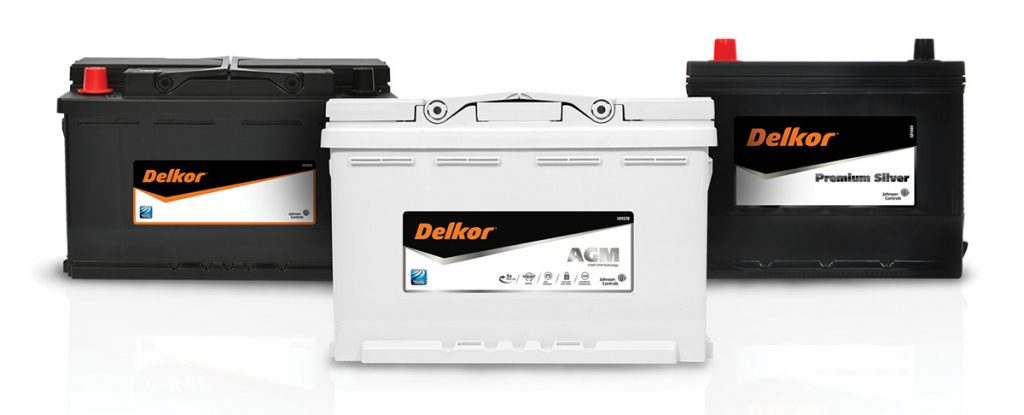
Batteries

What is a Cranking Amp (CA)?

Cranking amps are the numbers of amperes a lead-acid battery at 32 degrees F (0 degrees C) can deliver for 30 seconds and maintain at least 1.2 volts per cell (7.2 volts for a 12 volt battery).

In other words, CA/cranking amps determine how much power you have to start your car in most climates.

How can batteries of different sizes have the same capacity?

Batteries come in many different group sizes. A battery’s group size simply determines it’s length, width, height, and terminal configuration; this has nothing to do with a battery’s capacity. Regardless of the group size, two batteries are equal in power if the CCA [Cold Cranking Amp] ratings are the same.

New technology enables a great deal of power to be put into smaller cases with today’s new high capacity output design.

What is Reserve Capacity?

Reserve capacity is the time in minutes that a new, fully charged battery will deliver 25 amperes at 80 degrees farenheit and maintain a terminal voltage equal to, or greater than, 1.75 volts per cell. This rating represents the time the battery will continue to operate essential accessories if the alternator or generator of a vehicle fails.

Put another way, reserve capacity is a battery’s ability to sustain a minimum vehicle electrical load in the event of a charging system failure. Under the worst conditions (winter driving at night), this minimum could require current for ignition, low beam head lamps, windshield wipers, and defroster while driving at low speeds.

How does excessive cold affect my battery?

Extreme cold dramatically reduces the speed at which chemical reaction can occur, while increasing electrolyte resistance. It is important to keep batteries at a full charge during periods of extreme cold. Batteries in a discharged state are susceptible to freezing, which can cause damage to the plates and battery container.

Automobiles demand more from a battery in freezing temperatures as the motor oil thickens and makes the engine harder to crank.

What are Marine Cranking Amps [MCA]?

MCA is the commonly used rating for marine/RV starting power. It is the number of amperes a lead acid battery at 32 degrees farenheit (0 degrees C) can deliver for 30 seconds and maintain at least 1.2 volts per cell (7.2 volts for a 12 volt battery). This lets you know how much power you have to start your boat’s engine.

What are Amp Hours?

This rating applies to deep cycle marine batteries. Amp hours are simply a unit of measure for a battery’s electrical storage capacity. This is obtained by multiplying the current in amperes by the time in hours of discharge. For example, a battery delivering 5 amperes for 20 hours, delivers 5 amperes X 20 hours = 100 Amp Hr of capacity.

Put another way, this rating lets you know how many amps, for how long, you can draw from your deep cycle battery.

What are “Deep Cycle” Batteries?

These batteries are designed to provide “deep cycle” power – making them very different from ordinary car batteries. Starting a car requires a high amount of energy for a short period of time (about 5 seconds). Only a small amount of the battery’s capacity is used. Once the engine starts running, the battery is recharged quickly by the alternator, which carries the basic electrical load.

On the other hand, deep cycle batteries supply a relatively low amount of current for a long period of time. They are specially designed to power electric trolling motors and other electrical accessories in boats and RVs. Unlike ordinary car starting batteries, they can be run down and recharged (deep cycled) repeatedly with minimum loss of capacity.

When a car starting battery is deep cycled, it loses capacity very rapidly and in some cases has lost its useful capacity in 50 cycles (discharges and recharges) or less. These limitations make car batteries a poor investment when used for marine and RV deep cycle applications. A single deep cycle marine/RV battery will outlast 2-4 car batteries.

Are “Deep Cycle” batteries constructed differently?

Yes! Deep cycle batteries are specially designed with denser active material and thicker plates to withstand deep discharge-recharge service. They are also reinforced by envelope and glass mat separators to reduce shedding of the active material and damage from the jolting vibration of a boat on choppy water.

Car batteries, on the other hand, use porous active material and thin plates so that high-amp energy can be quickly delivered for maximum starting power. Repeated cycling weakens the positive plates and makes the active material shed from the grids. Thus, in repeated deep discharge-recharge applications, the capacity of the car battery drops below desired levels in about 50 cycles. They are not built to withstand the heavy buffeting experienced by marine batteries. They are simply designed to do a different job.

Please Contact for Current Availability of Stock and Pricing